
Oman's mountain and oasis villages are where the country's soul lives — stone and mud-brick houses stacked into hillsides, ancient falaj water channels threading through date plantations, and a pace of life that has barely changed in generations.
Villages Worth the Journey
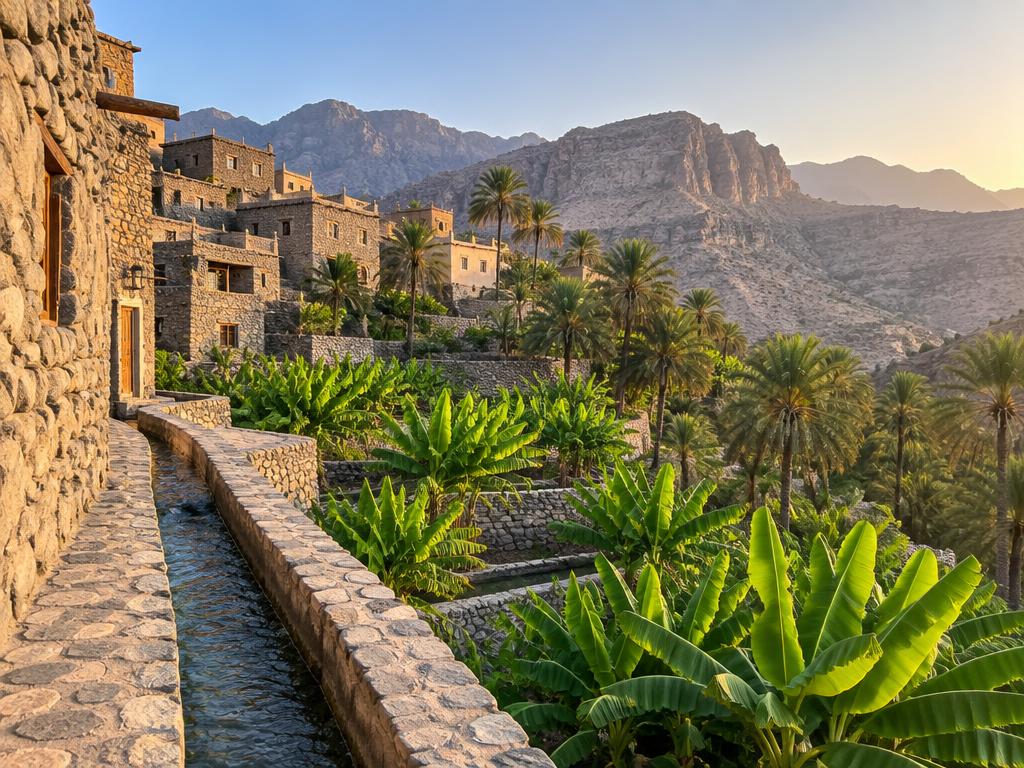
Misfat Al Abriyeen is the most photogenic of them all — a maze of shaded alleyways above a lush oasis, best explored on foot with a local guide. Bilad Sayt, tucked into a bowl of mountains at the end of a dramatic 4WD track, rewards the effort with terraced fields and a timeless atmosphere.
In the far north, villages like Wajmah sit on the edge of the Hajar Mountains, where heritage homes have been carefully restored so visitors can sleep inside living history rather than beside it.
- Misfat Al Abriyeen — stone alleys, falaj channels and date groves
- Bilad Sayt — a hidden mountain village reached by 4WD
- Wajmah Village — restored heritage homes on the Hajar slopes
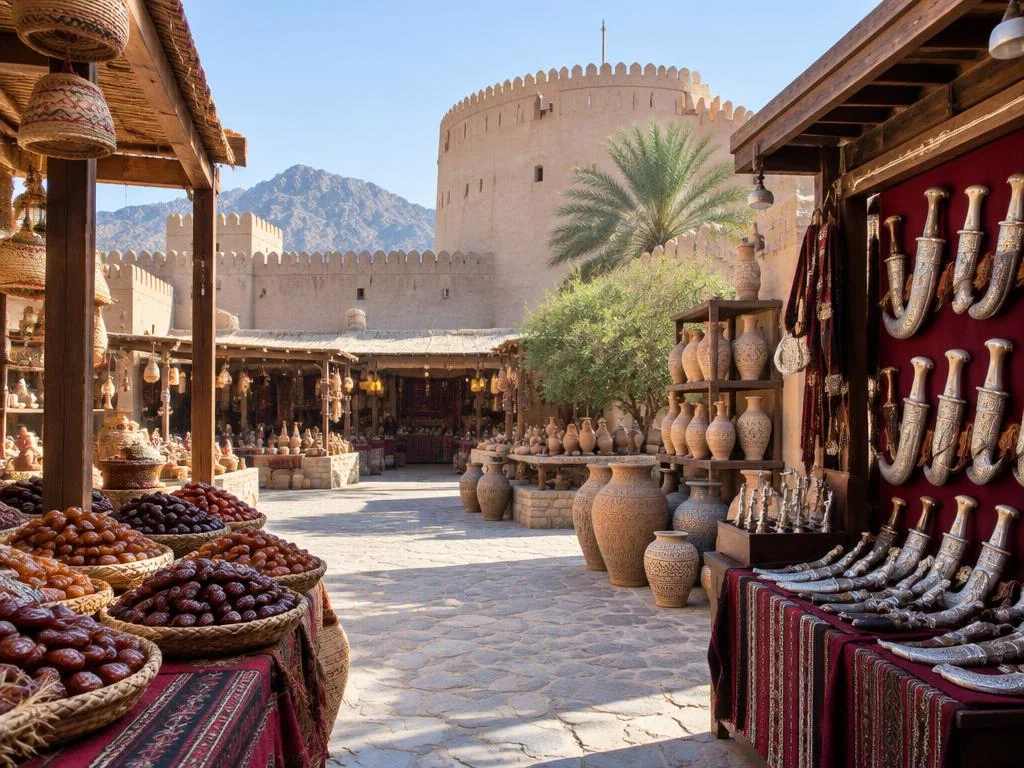
- Al Hamra — one of Oman's oldest preserved mud-brick towns
What to Expect
Village visits are unhurried. You'll walk narrow lanes, meet local families, learn how the falaj irrigation system has watered these oases for over a thousand years, and often be invited for kahwa — Omani coffee served with dates.
Many villages are still home to working farms, so expect goats on the paths, the smell of frankincense, and genuine curiosity from residents who are proud to share their home.
Practical Tips
Wear comfortable walking shoes — village paths are steep and uneven. Dress modestly out of respect for local communities, and always ask before photographing people. Some mountain villages require a 4WD vehicle, which is included in our private journeys.
- Sturdy walking shoes for steep, uneven paths
- Modest clothing out of respect for residents
- Ask permission before photographing people
- 4WD required for remote villages like Bilad Sayt
Want to experience this?
See it on a real journey