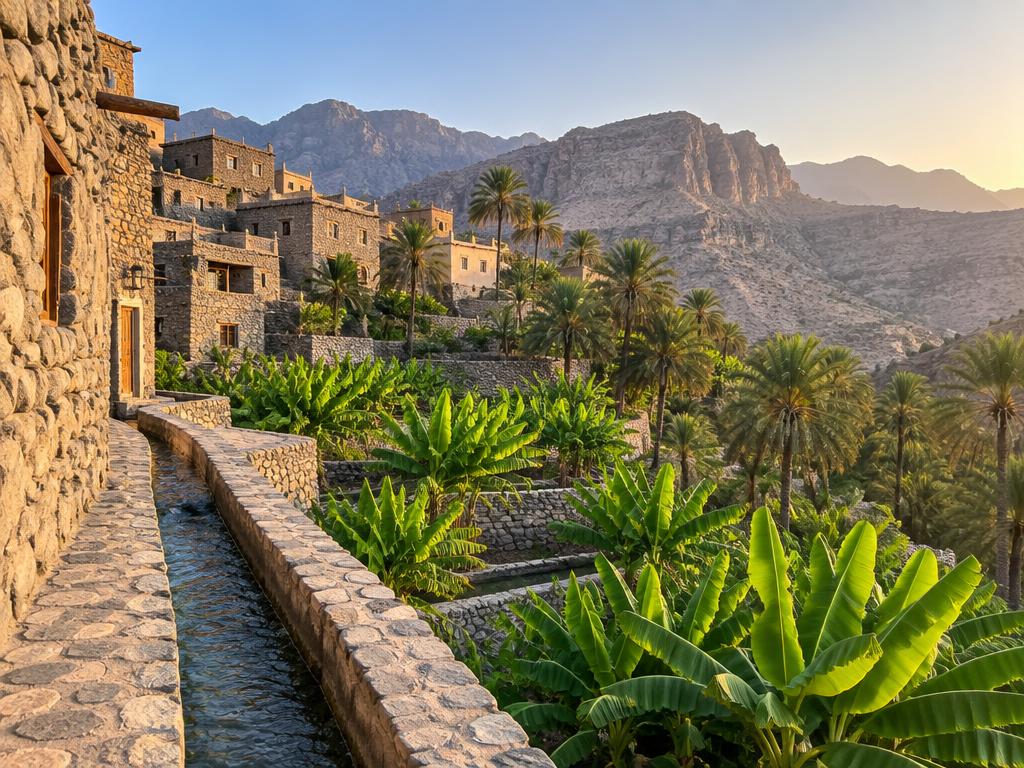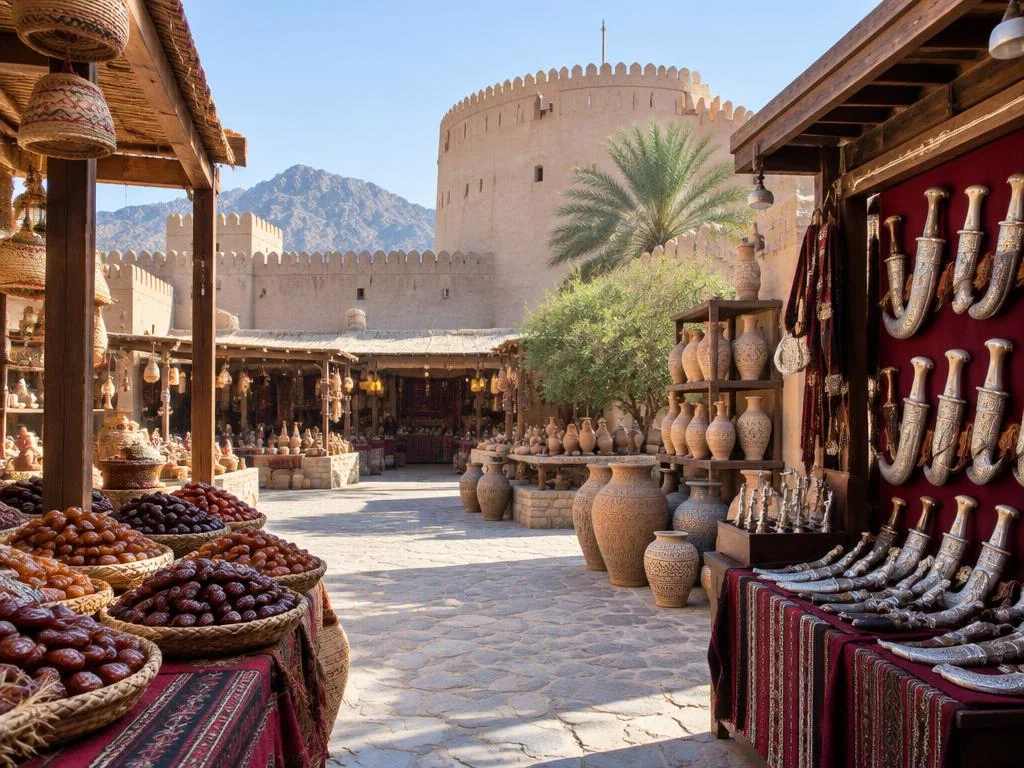

Omani cuisine is a quiet treasure — shaped by the country's seafaring trade with India, Persia and East Africa, and by a hospitality culture where no guest ever leaves unfed.
Dishes to Try
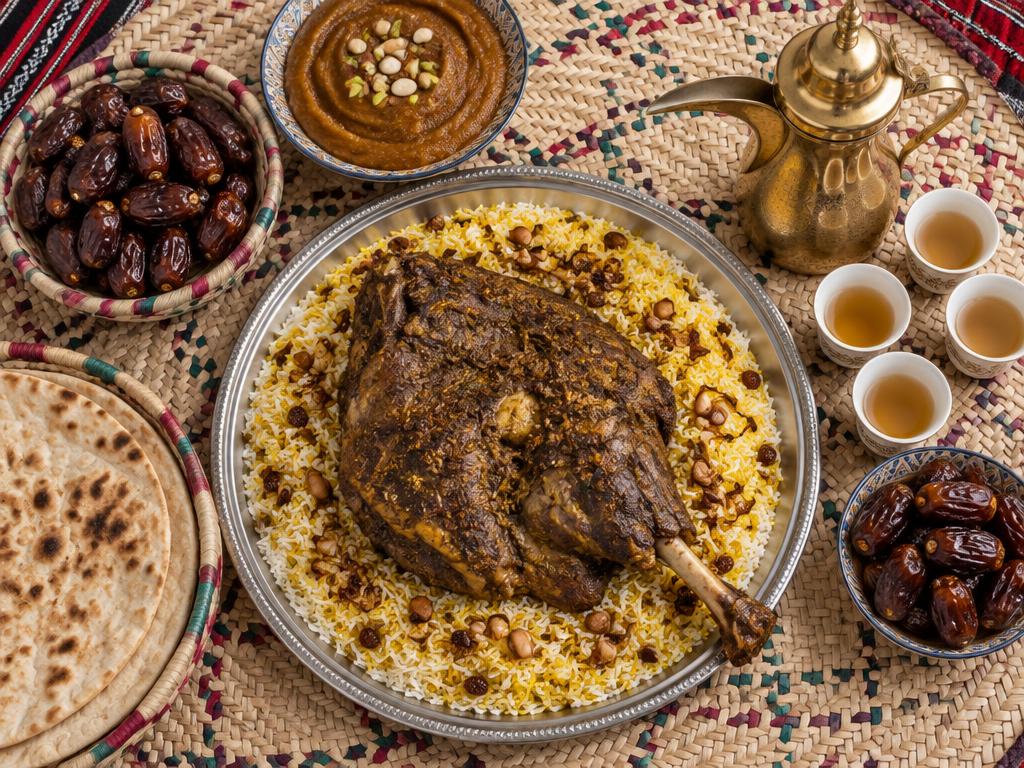
Shuwa is the crown jewel: lamb or goat marinated in spices, wrapped in banana leaves and slow-cooked underground for up to two days — traditionally prepared for Eid and special occasions. Majboos (also called kabsa) is the everyday favourite, fragrant spiced rice with chicken, fish or meat.
On the coast, look for grilled kingfish and tuna fresh from the morning catch. In the mountains, try harees — a comforting wheat-and-meat porridge — and Omani bread baked on hot stones.
- Shuwa — slow-cooked underground spiced lamb
- Majboos — fragrant spiced rice with meat or fish
- Mishkak — grilled meat skewers, a street-food staple
- Omani halwa — rosewater and saffron sweet served with coffee
Kahwa: The Coffee Ritual
Omani coffee — kahwa — is flavoured with cardamom and sometimes rosewater, poured from a distinctive dallah pot into small cups, and always accompanied by dates. Accepting kahwa is accepting friendship; you'll be offered it in homes, shops and heritage houses across the country.
Where to Eat
The best Omani food is found in local restaurants and family homes rather than hotel dining rooms. In Muscat, the Muttrah area has excellent traditional eateries; on our journeys we arrange meals in heritage homes and local restaurants so you taste the real thing.
- Try local restaurants in Muttrah and Nizwa souq areas
- Meals in heritage homes can be arranged on our tours
- Vegetarian options are widely available — just ask
Want to experience this?
See it on a real journey