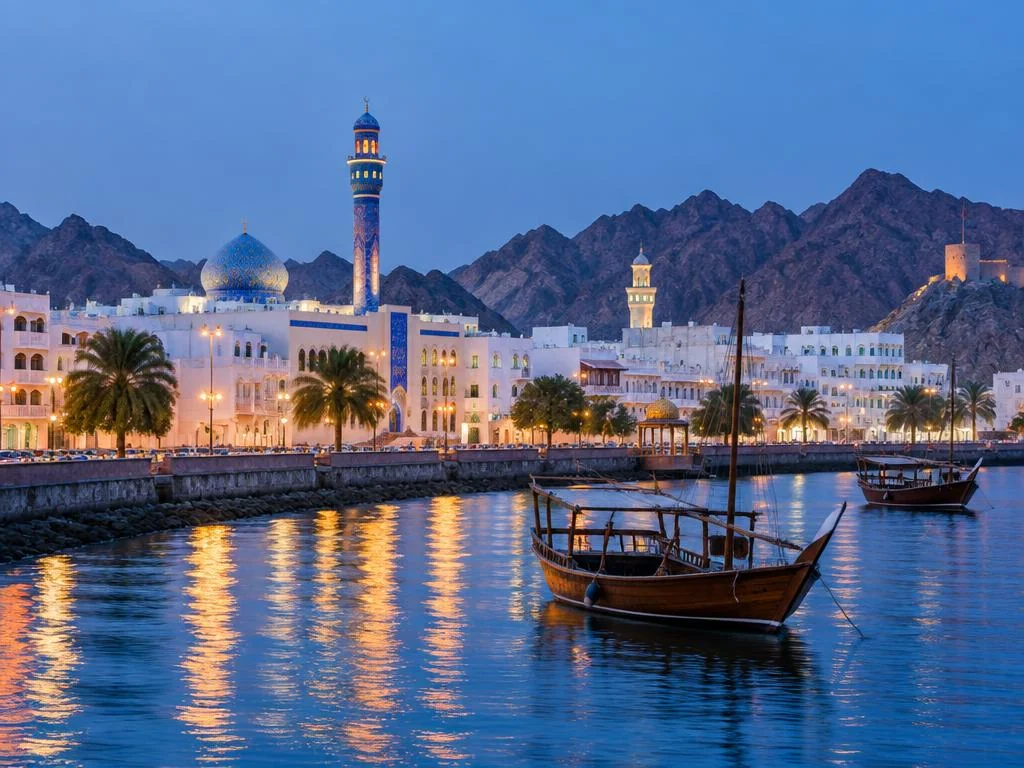

Muscat is a capital unlike any other in the Gulf — low-rise, whitewashed and wrapped between mountains and sea, where grand mosques and royal palaces sit alongside working souqs and fishing harbours.
The Landmarks
The Sultan Qaboos Grand Mosque is the city's masterpiece, open to non-Muslim visitors in the mornings — its main prayer hall holds a 4,200-square-metre hand-woven carpet and a breathtaking chandelier. The Royal Opera House, Al Alam Palace flanked by the twin Portuguese forts of Mirani and Jalali, and the Muttrah Corniche round out the essential sights.
- Sultan Qaboos Grand Mosque — visit before 11am, modest dress required
- Muttrah Souq — one of the oldest markets in the Arab world
- Muttrah Corniche — harbour views, best at sunset
- Al Alam Palace and the twin forts of old Muscat
Muttrah: The Old Heart
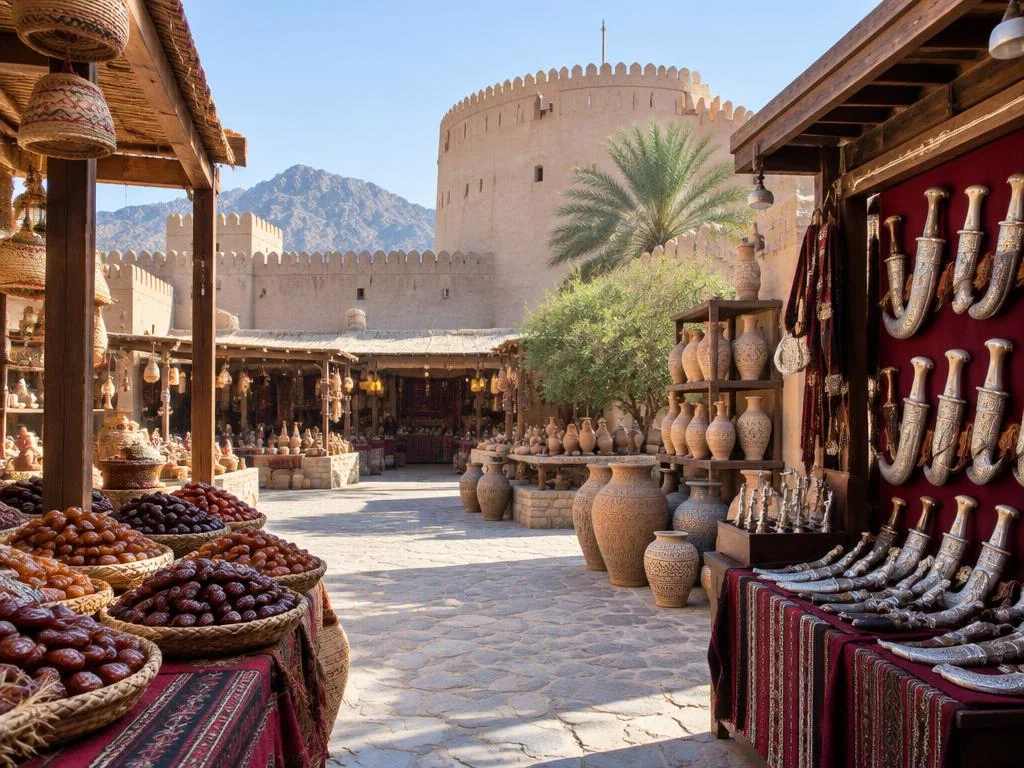
Muttrah is where Muscat's trading soul lives on. Get lost in the souq's covered alleys of frankincense, silver, pashminas and lanterns, then walk the corniche as the evening call to prayer echoes across the harbour. The fish market at the corniche's far end is a slice of everyday Omani life.
Practical Tips
Muscat is spread out, so plan your day by area: the mosque and Opera House in the morning, Muttrah and old Muscat in the afternoon and evening. The mosque is closed to visitors on Fridays. Taxis don't use meters reliably — agree the fare first, or let us handle transport as part of your journey.
- Group sights by area — the city is spread out
- Grand Mosque closed to visitors on Fridays
- Agree taxi fares in advance, or travel with a private driver
Want to experience this?
See it on a real journey